
Centre For Interdisciplinary Sciences
Driving research, innovation, and interdisciplinary excellence.
Why Choose Centre For Interdisciplinary Sciences (CIS)
Salient Points
- Scholarships for bright and meritorious students.
- Research/industrial training in leading National and International institutes.
- Need based curriculum designed for academic and industrial demand (Unique in Eastern India).
- Cutting edge research with in-house laboratory facilities.
- Excellent placement support as well as scope of higher studies and research at leading National / International industries and institutes.
- Research collaborations with several leading national and international institutes and industries.
Course Name: M.Sc in Polymer Science and Technology
Duration: 2 Years
Eligibility Criteria
BSc (with minimum 50% marks or equivalent CGPA) in Chemistry / Physics / Biochemistry / Life Sciences
Course Name: M.Sc in Paint and Coating
Duration: 2 Years
Eligibility Criteria
BSc in Physics / Chemistry / Biosciences; BE/BTech in relevant areas. Candidates with work experience in relevant industries will be preferred.
Course Name: M.Tech in Paint and Coating Technology (Hybrid mode)
Duration: 3 Years
Eligibility Criteria
BSc (with minimum 50% marks or equivalent CGPA) in Chemistry / Physics / Biochemistry / Life Sciences
Course Name: PhD
Areas of Research
Areas: Organic and Bio-Organic Chemistry / Medicinal Chemistry / Materials and 3D printing / Paint and coating technology / Biosensing and Sensor technology / Advanced material research / Immuno-Epigenetics / Nanomedicine / Nanomaterials and protein aggregation and allied domains
Research and Development
The Centre for Interdisciplinary Studies (CIS) is committed to emerging as a research group of global reach in the design and development of novel biomaterials, including polymeric and nanomaterials, along with sensor technology and IoT. The Centre emphasizes green and sustainable alternatives for cutting-edge industrial applications, while also fostering innovation and design science through the integration of interdisciplinary technologies.
3D Printing & Materials
- Artificial skin
- Dental and bio-implants
- Paints and coating
- Drug delivery and theranostics
Sensor Technology
- Disease diagnosis and point-of-care testing kits
- Fluorescence probes for biosensing
- Environmental pollution sensing
- Food and water quality monitoring
- Sensor device fabrication and low-cost water purifiers
Industrial Product Designing
- Bioplastics to replace single-use plastics
- Advanced drug delivery and theranostics
Nanomedicine & Therapeutics
- Nanomedicines and herbal medicines for leishmaniasis, microbial infections, and cancer
- Nano-particle based vaccines against infectious diseases and cancer
- Drug repurposing through in silico approaches
- Epigenetic landscapes in disease pathogenesis and treatment
Advanced Materials Research
- Graphene-based composite materials for energy research
- Printable pastes using organo-metallic precursors for electronics assembly
- Graphene and 2D material reinforced composites for thermal and mechanical applications
Nanomaterials & Protein Aggregation
- Designing nanoparticulate systems for drug delivery
- Protein-ligand/nanomaterial interactions
- Effects of nanomaterials on lipid bilayer membranes
- Novel therapeutic agents for protein aggregation modulation
CIS maintains strong collaborations with leading institutes and industries worldwide, including IIT Kharagpur, CSIR-IICB, MG University Kerala, NIPER Kolkata, SNBNCBS Kolkata, PDPU Gujarat, IIEST Shibpur, IPF Dresden (Germany), POSTECH (South Korea), Hongik University (South Korea), GUT (Poland), Georgia Institute of Technology (USA), Indian Paint Association (IPA), and Confederation of Indian Industry (CII).
In-House Facilities
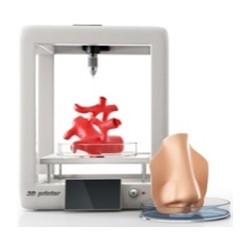
3D Bio-Printer
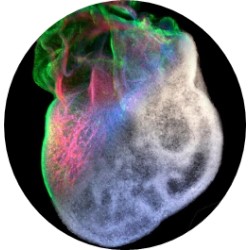
3D Bio-Printer
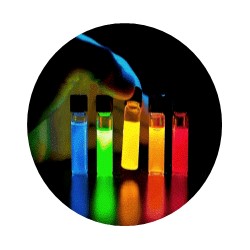
Sensing Lab
Spectro Photo Meter
Research Highlights
Lighting Up Life: Smart Fluorescent Materials for Health, Environment, and Beyond
PI: Dr. Subhankar Singha
Dr. Subhankar Singha’s research at JISIASR bridges fundamental organic chemistry with cutting-edge applications in healthcare and environmental monitoring through the development of smart fluorescent materials. The group designs novel fluorescent probes for biosensing, bioimaging, and drug delivery, including two-photon active fluorophores for high-resolution 3D imaging and portable sensor devices for environmental and biological sample analysis. A hydrogen sulfide probe has been commercialized by Merck Inc., showcasing translational impact.
Cancer Theranostics and Molecular Imaging
PI: Prof. Sankarprasad Bhuniya
Prof. Sankarprasad Bhuniya’s work focuses on small-molecule fluorescent probes and theranostic agents for cancer detection and treatment. His group develops chemoselective, organelle-targeted probes for real-time monitoring of biological events and stimuli-responsive drug delivery systems. Recent efforts include multimodal imaging agents combining fluorescence, photoacoustic, and MRI for precise disease diagnosis and treatment monitoring.
Engineering Interactions Between Bio-Active Molecules and Functionalized Graphene
PI: Dr. Barun Das
This study explores interactions between flavonoids and functionalized graphene-based materials using spectroscopic techniques and theoretical modeling (DFT). Insights into structural changes, bonding, and interaction energies pave the way for designing graphene-based platforms for drug delivery and biosensing applications.
Functional Amyloid-Based Hydrogels for Drug Delivery and Wound Healing
PI: Dr. Pooja Ghosh
Dr. Pooja Ghosh’s research focuses on amyloid nanostructure-based hydrogels for 3D-printing biomedical scaffolds. These hydrogels demonstrate excellent mechanical stability, biodegradability, and biocompatibility, making them ideal for targeted drug delivery and wound healing applications, with promising results in cytotoxicity and hemocompatibility assays.
Development of Novel Barrier Coatings
PI: Dr. Subhajit Ghosh
Dr. Subhajit Ghosh’s research addresses metal corrosion, a major economic issue in India, by developing cost-effective barrier coatings and novel corrosion inhibitors. These coatings, composed of resins, pigments, and solvents, offer compatibility with diverse substrates and aim to reduce corrosion-related GDP losses.
Innovative Therapeutics and Epigenetic Insights in Infectious and Chronic Diseases
PI: Dr. Farhat Afrin
Dr. Farhat Afrin’s research explores nanomedicines, herbal therapeutics, and epigenetic modulation for diseases like cancer and leishmaniasis. The group develops liposomal vaccines, functional nanomedicines, and in silico drug repurposing strategies, alongside studying epigenetic alterations for novel therapeutic pathways.
Development of High Energy Density Na-ion Batteries
PI: Dr. Subham Ghosh
Dr. Subham Ghosh’s research focuses on sustainable energy through high energy density Na-ion batteries. By optimizing electrode materials and electrolytes, the project aims to create durable, safe, and cost-effective batteries for energy storage in renewable energy systems and electric transport.
Development of Customized Implants and Bone Grafts for Dental and Orthopedic Applications
PI: Dr. Venkata Sundeep Seesala
The research explores hybrid fabrication techniques like green machining, 3D printing, casting, and molding to develop advanced gradient biomimetic architectures for titanium and zirconia implants. These designs mimic natural bone architecture, validated by computational, in vitro, and in vivo studies. Surface engineering with bioactive compounds like HA and Bioglass enhances osseointegration, stress distribution, and healing time, aiming to challenge foreign dominance in the Indian implants market.