



Centre For Renewable & Sustainable Energy Studies
Driving innovation in clean energy, sustainability, and a greener tomorrow.
About Centre for Renewable & Sustainable Energy Studies (CReSES)
The Centre for Renewable & Sustainable Energy Studies (CReSES) at JIS Institute of Advanced Studies & Research is committed to preparing the next generation of skilled professionals and researchers to lead India’s clean energy transformation. Unlike conventional postgraduate programs, CReSES offers an immersive research-driven experience even at the masters’ level, with focused training in solar photovoltaics, environmental impact assessment, hydrogen energy, smart sensors & instrumentation, biomedical instrumentation, thermal energy systems, carbon sequestration, waste to energy, electric vehicle technology, battery storage and smart energy management.
The Centre actively engages students in industry-relevant and application-oriented research, supported by a multidisciplinary faculty team and well-equipped laboratories. In line with India’s renewable energy roadmap, our programs are designed to build human capital for a carbon-optimized and circular economy. Students—whether fresh graduates or working professionals—are encouraged to contribute to innovative solutions in energy generation, storage, mobility, and recycling, aligning with both national missions and global sustainability goals.
With a strong focus on academic excellence, hands-on research, academic and industry collaboration, CReSES stands as a unique hub in Eastern India for advancing clean and sustainable energy technologies.
Vision & Mission
Vision
To emerge as a centre of excellence in education and research dedicated to advancing sustainable energy and green mobility solutions, through the development of skilled professionals, innovative technologies, and impactful research that contribute to a cleaner, carbon-optimised, and circular global economy.
Mission
In response to the urgent challenges posed by global climate change and the transition from fossil fuels to renewable energy, the Centre is committed to nurturing the next generation of scientists, engineers, and researchers through its M.Sc., M.Tech., and Ph.D. programs. Aligned with national and global sustainability goals, the Centre aims to:
- Provide interdisciplinary, industry-relevant education to both young learners and working professionals in the fields of renewable energy, and sustainable systems.
- Develop a skilled human resource pool capable of driving innovation and leading the carbon optimized clean energy transition in India and beyond.
- Foster cutting-edge research in areas such as advanced photovoltaics, energy efficient system, smart sensors, electronic designs and instrumentation, hydrogen energy, biomedical instrumentation, environmental pollution and prevention, EV and battery technology etc.
- Promote technology development, system integration, and policy-oriented solutions to support clean energy deployment, sustainable transportation, and green industrial practices.
- Establish strong academic-industry collaborations to address real-world challenges and accelerate the adoption of sustainable technologies.
Salient Points
- Collaborations with leading industries and academic institutes
- Strong placement assistance
- Job-Oriented course curriculum
- State-of-the-art laboratory facility
- Internationally experienced faculty team
Duration: 2 Years (In regular mode and for working professionals)
Eligibility Criteria
Bachelor’s Degree in Engineering (Electronics / Electrical / Instrumentation / Mechanical or Other Relevant Area) / Masters Degree in Science (Chemistry/Physics/Electronics
Duration: 2 Years
Eligibility Criteria
BSc (with minimum 50% marks or equivalent CGPA) in Chemistry/ Physics/ Electronics/Geography/Geology or other Relevant Area
Areas: Renewable energy and applications / Smart and self-cleaning technology / Radiative cooling technology / Smart sensor system and instrumentation / Biomedical instrumentation / Electronics design and instrumentation / PV system reliability / Prosthetics & orthotics / Hydrogen energy / Environmental pollution and prevention / EV and battery technology / Advanced alloy design for EV components / Sustainable and Green Coating Technologies / AI Optimized Additive Manufacturing for energy sectors / Anti-corrosion coatings for Hydrogen storage.
Research and Development
The Centre for Renewable & Sustainable Energy Studies (CReSES) offers an exceptional platform for cutting-edge research and innovation through its M.Sc., M.Tech. and Ph.D. programs in the domain of Renewable Energy and allied technologies. Both postgraduate students and doctoral researchers engage in a wide array of interdisciplinary projects across high-impact areas such as advanced solar photovoltaic systems, quality and performance assessment, degradation analytics, thermal energy solutions, battery technologies, hydrogen energy, smart sensor system, instrumentation and electronic designs.
CReSES also pioneers biomedical sensor designs, prosthetics, and wearable health technologies, where interdisciplinary teams integrate electronics, materials science, and data analytics to address healthcare challenges. This unique convergence of energy and biomedical innovation enables the Centre to drive solutions that advance both sustainability and quality of life.
Through deep academic investigation and practical exploration, Ph.D. scholars drive foundational research, while M.Sc. and M.Tech. students engage in application-focused studies, both leveraging state-of-the-art laboratories, internationally-experienced faculty mentorship, and active industry collaborations. This integrated learning and research environment not only builds advanced problem-solving and analytical skills, but also prepares graduates and researchers to lead innovations, influence policy, and contribute to global sustainability goals.
With increasing national and international investments in renewable energy and green mobility, CReSES graduates and Ph.D. researchers are uniquely positioned to shape the future of sustainable technologies across academia, R&D institutions, clean-tech industries, and entrepreneurial ventures.
Career Opportunities
Graduates of the M.Sc., M.Tech., and Ph.D. programs at the Centre for Renewable & Sustainable Energy Studies (CReSES) are well-prepared to enter a rapidly expanding clean energy sector in India and abroad. With strong government support through initiatives like the National Green Hydrogen Mission, FAME-II Scheme, PLI schemes for solar PV and battery manufacturing, National Electric Mobility Mission, and PM-KUSUM, job opportunities are booming across public and private sectors. There is growing demand for skilled professionals in solar energy, EVs, hydrogen, energy storage, and smart grids, with placements in R&D labs, PSUs, startups, and multinational firms. Additionally, the rise of numerous small and large-scale companies/start-ups in the renewable domain has significantly expanded career options in design, manufacturing, consulting, and project implementation. Internationally, graduates find roles in universities, research institutions, and global clean-tech companies, particularly across Europe, North America, and Southeast Asia. Ph.D. holders are especially well-positioned for academic careers, postdoctoral research, and high-impact roles in global research collaborations, while M.Sc. and M.Tech. graduates thrive in technical leadership, system design, and project implementation roles within the rapidly evolving green economy.
Roles: Enviromnental Management
Research Highlights
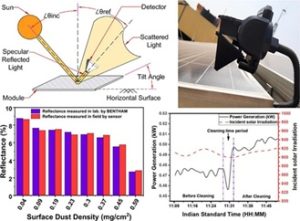
Development of Smart Dust Detector for Optimal Generation of SPV Power Plant

A novel specular reflectance-based dust sensor detects surface dust on solar modules, triggering cleaning cycles with 95% detection accuracy. Field trials showed a 9% improvement in daily energy generation. This cost-effective, scalable solution enhances MW-level solar plant performance by addressing dust-related underperformance.

Mobile Green Power Pack (MGPP): A Sustainable Solution for GHG Reduction

The Mobile Green Power Pack (MGPP) is a portable solar-battery system integrated into a vehicle, providing clean electricity for events and emergencies. Deployable in cyclone-affected areas, its use on 50% of days annually reduces CO₂ emissions by 1.98 metric tons, offering a sustainable, flexible energy solution.
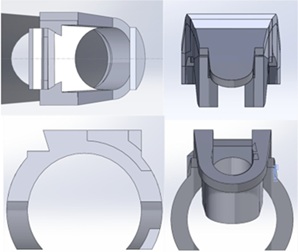
Advanced Attachment System for Real-Time Intra-Oral Visualization

A detachable camera-light accessory for dental handpieces enhances visibility in hard-to-access oral cavity areas. Featuring a flexible, X-axis adjustable camera and adjustable light source, it improves operative precision in posterior regions. Field trials confirm its potential for clinical adoption.
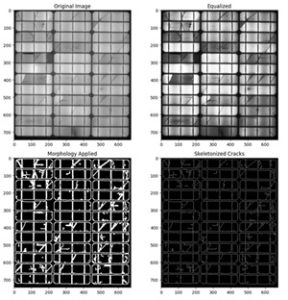
Advanced Image-Based Diagnostics for PV Modules

This study uses image processing on electroluminescence and thermal images to detect and classify PV module defects like cracks and shunts. Overcoming limitations of traditional methods, it ensures accurate defect identification under varying conditions, enhancing PV module reliability and performance.
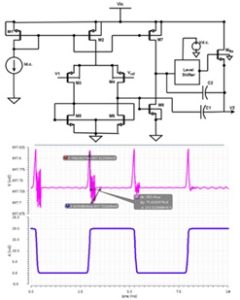
Low Voltage PV Applications

A low-voltage, low-dropout (LDO) regulator for solar PV cells achieves a 0.1 V dropout voltage and 79.2% efficiency, delivering a stable 0.9 V output from a 1 V input. With an 85° phase margin and over 50 dB DC gain, it’s ideal for low-power, solar-driven systems
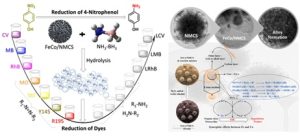
Alloy NPs@Porous Carbon for Antibiotic Degradation and Hydrogen Evolution

Bimetallic alloy nanoparticles supported on porous carbon, synthesized using a tube furnace, offer enhanced stability and reusability for catalysis. The use of bi-metals ensures high activity, making it effective for antibiotic degradation and hydrogen evolution applications.
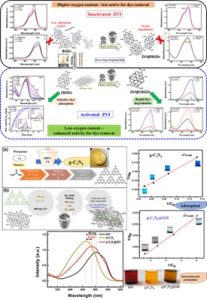
Graphene-Carbon Nitride Composite for Environmental Pollution and Prevention

Prepared via hydrothermal treatment, carbonization, and ball milling, this graphene-carbon nitride composite enables selective dye adsorption and sonocatalytic dye degradation. Various adsorption models were applied, achieving effective environmental pollution control through wastewater treatment.
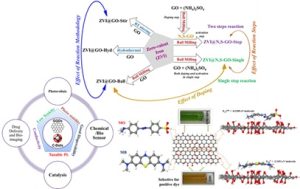
Carbon Dots and Graphene Oxide for Wastewater Treatment

Multicolor carbon dots synthesized via microwave methods enable metal ion sensing through an OFF-ON mechanism. Graphene oxide (GO), prepared using modified Hummers method and exfoliated via ultrasonication or ball milling, supports metals@GO for adsorption and degradation in wastewater treatment.
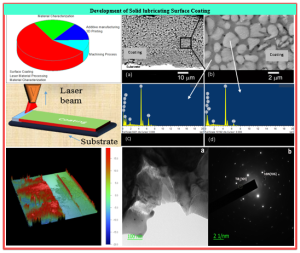
Advanced Sustainable Coating Technology

Laser based material processing is used to develop hard, wear-resistant, and self-lubricating coatings with excellent adhesion. These coatings reduce friction, improve durability, and enhance the service life of engineering components.
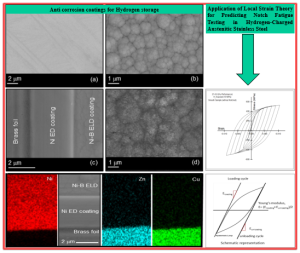
Surface Engineering and Mechanical Reliability of Metallic Components in Hydrogen Environments

Development of advanced multilayer coatings on brass foil enhances corrosion resistance and durability for H₂ fuel cell applications, while local strain theory enables accurate prediction of notch fatigue behavior in hydrogen-charged austenitic stainless steel, improving material reliability in hydrogen environments.