
DR. SHYAMA PROSAD CHOWDHURY
Adjunct Professor Ph.D. (Queen’s University Belfast, UK)Senior Manager, Cognitive, IBM(17+ years of Experience)
JIS Institute of Advanced Studies and Research


Adjunct Professor Ph.D. (Queen’s University Belfast, UK)Senior Manager, Cognitive, IBM(17+ years of Experience)

Adjunct Professor Ph.D. (Jadavpur University)Global CTO – Data & AI, Cloud Advisory, IBM(26+ years of Industry Experience)
Faculty Associate M.Tech : IIT (ISM) Dhanbad
Assistant Professor, Centre for Data Science Ph.D: Rajendra Mishra School of Engineering Entrepreneurship (Pursuing), IIT Kharagpur, India Email: bijitaswac@jisiasr.org Linked-In: www.linkedin.com/in/bijitaswa-chakraborty-b5a223134 Google scholar: https://scholar.google.com/citations?user=ly243pIAAAAJ&hl=en Ph.D: Rajendra Mishra School of Engineering Entrepreneurship (Pursuing), IIT Kharagpur, India M.Tech: School of computer Engineering, Kalinga Institute of Industrial Technology (KIIT University), Bhubaneswar, India B.Tech: Department of Information Technology, Govt. College of Engineering and Ceramic Technology, West Bengal University of Technology, Kolkata, India Professional Engagements: Assistant Professor at Department of Computer Science and Engineering, Institute of Science and Technology (West Bengal University of Technology), August, 2016 – January, 2017. Assistant Professor at Department of Business Analytics and Fintech, GITAM School of Business, GITAM (Deemed to be University), 1st December, 2022- 30th June, 2023. Assistant Professor at JIS Institute of Advanced Studies and Research, Kolkata, India, 1st August, 2023- Present Research topics: Financial and business Analytics, Text analytics, Sports analytics, Healthcare analytics Research focus: Business analytics: Business analytics is a broad research area that focuses on using data and statistical techniques to improve business decision making and drive organizational success. It involves analyzing past and present data to identify patterns, trends, and insights that can guide future decision making. This research area encompasses a wide range of techniques, such as data mining, predictive analytics, and business intelligence, and incorporates both quantitative and qualitative data analysis. Business analytics has become increasingly important in today’s fast-paced and data-driven business environment, as companies look for ways to streamline operations, optimize performance, and gain a competitive edge. Key areas of focus in business analytics research include data management, data visualization, and the development of advanced analytical models and tools. As the field continues to evolve, there is a growing emphasis on incorporating emerging technologies such as artificial intelligence and machine learning into business analytics processes. Overall, business analytics research aims to help organizations make data-driven decisions that lead to improved performance and greater success in today’s highly competitive business landscape. Healthcare analytics: Healthcare analytics is an emerging area of research that combines healthcare and data analysis to identify patterns and insights in health data. It involves using various statistical techniques, data mining, and predictive modeling to extract useful information from large and complex datasets in the healthcare field. This information can help healthcare organizations to make informed decisions, improve patient outcomes, and reduce costs. The research in this area focuses on understanding the challenges and opportunities in applying analytics to healthcare data, developing and evaluating algorithms and tools for data processing and analysis, and studying the impact of analytics on decision-making in healthcare. It also explores the ethical implications and privacy concerns in handling sensitive healthcare data. The ultimate goal of healthcare analytics research is to provide evidence-based insights that can improve the efficiency, quality, and safety of healthcare delivery. As technological advancements continue to generate an explosion of health data, healthcare analytics is becoming increasingly important and has the potential to revolutionize the healthcare industry. My research involves the following research areas: Achievements: All India Rank 97 in KIITEE (Computer Science), 2013 for M.Tech admission in KIIT University MHRD Doctoral Scholarship (January 2017 – December 2021), MHRD, Govt. of India Travel grants: Full conference and travel grant by MHRD for attending Annual ISDSI conference 2019 in Bhubaneswar, India Full conference and travel grant by MHRD for attending 29th Global Finance Conference in Braga, Portugal in June, 2022 Publications: Journals: Chatterjee, M., Bhattacharjee, T., Chakraborty, B., Daim, T., & Kupeli, B. (2024). Exploring Corporate Governance on Post-IPO Performance of R&D Intensive New Public Firms. Journal of Engineering and Technology Management, 71, 101796. Chatterjee, M., Bhattacharjee, T., & Chakraborty, B. (2023). Studies on Indian IPO: systematic review and future research agenda. Qualitative Research in Financial Markets, Vol. ahead-of-print No. ahead-of-print. https://doi.org/10.1108/QRFM-10-2021-0175 Chakraborty, B., Chatterjee, M., & Bhattacharjee, T. (2023). Impact of analyst report on the behavior of retail investors: a study during COVID-19 in India. Journal of Financial Reporting and Accounting, 21(5), 1188-1205. Chakraborty, B., & Bhattacharjee, T. (2020). A review on textual analysis of corporate disclosure according to the evolution of different automated methods. Journal of Financial Reporting and Accounting, 18(4), 757-777. Conferences: Chakraborty B and Bhattacharjee T, “Content Analysis of Corporate Disclosure for Capturing Market Sensitive Information: A Review of Literature”, presented in Management Doctoral Colloquium and VGSOM Research Scholar’s Day (MDC & VRS 2019), IIT Kharagpur, Jan, 2019. Chakraborty B and Bhattacharjee T, “An empirical model to analyse MD&A disclosure in annual report: An impression management approach in Indian context”, presented in 13th Annual ISDSI Conference, IIM Sambalpur, Dec, 2019. Chakraborty B and Bhattacharjee T, “Do managers engage in impression management? A study in Indian context”, presented in Management Doctoral Colloquium and VGSOM Research Scholar’s Day (MDC & VRS 2020), IIT Kharagpur, Jan, 2020. Chakraborty B and Bhattacharjee T, “Tone of MD&A disclosure in the integrated reporting: Incremental information or Impression management?”, presented in Strategic Management Forum, IIM Nagpur, Dec, 2021. Chakraborty B and Bhattacharjee T, “Does management provide value relevant incremental information or engage in impression management: A study based on CSR disclosure in the Indian context”, presented in Strategic Management Forum, IIM Nagpur, Dec, 2021. Chakraborty B and Bhattacharjee T, “Does the information in the CSR disclosure designate value relevance or impression management: a content analysis approach in the Indian Context”, presented in Global Finance Conference, University of Minho, Braga, Portugal, June, 2022.
Assistant Professor Ph.D. in Biomedical Signal Processing Indian Institute of Technology Kharagpur, Kharagpur Email:kasturibarik.iitkgp@gmail.com LinkedIn:https://www.linkedin.com/in/kasturi-barik-094b7966/ GoogleScholar:https://scholar.google.com/citations?user=CzXQz5sAAAAJ&hl=en Ph.D.:Department of Electronics and Electrical Communication Engineering, Indian Institute of Technology Kharagpur, Kharagpur M.S. (by Research):Department of Electronics and Electrical Communication Engineering, Indian Institute of Technology Kharagpur, Kharagpur B.Tech.:Department of Electronics and Communication Engineering, West Bengal University of Technology, West BengalProfessional Engagements: April 2024 – Present: Assistant Professor, Centre for Data Science, JIS Institute of Advanced Studies and Research, Kolkata, India. January – April 2019; 2020; 2021; 2022; 2023: Teaching Assistant, NPTEL SWAYAM, India. April 2015 – June 2018: Junior Project Officer (JPO), IIT Kharagpur, Ministry of Human Resource Development, Govt. of India (MHRD), India. November 2013–March2015: Junior Project Officer (JPO), IIT Kharagpur, Ministry of Health and Family Welfare, Govt.of India (MoHFW), India. Research Topics: Neuro-signal processing, Machine learning, Bio-medical signal, Statistical methods, Deep learning, Cognitiveneuroscience, Pattern recognition, Digital SignalProcessing. Summary of Research Activities: Awards & Achievements: Publications: Journal: Conferences: Saha, U., Barik, K., De, A., 2023, “Fusion of Spectral and Connectivity Features to Detect Depressive Disorder using EEG Signals”. In 3rd IEEE Conference on Applied Signal Processing (ASPCON), West Bengal, India, 25-26 November 2023. Methodologies in Biomedical and Health Care, 2022 Journal: DOI : https://doi.org/10.1007/s12539-020-00412-5 DOI : https://doi.org/10.1016/j.asoc.2021.107347Conferences:
Assistant Professor Ph.D: Department Of Computer Science And Technology, IIEST Shibpur, India Email: chirantana@jisiasr.org Linked-In:https://www.linkedin.com/in/chirantana-mallick-phd-0a0848b5/ GoogleScholar: https:https://scholar.google.com/citations?user=9zppzdgAAAAJ&hl=enPh.D.: Department of Computer Science and Technology, Indian Institute of Engineering Science and Technology, Shibpur, IndiaM.Tech.: Department of Computer Science and Technology, Indian Institute of Engineering Science and Technology, Shibpur, IndiaB.E.: Department of Computer Science and Engineering, Burdwan University, IndiaProfessional Engagements:April 2023 – Present: Assistant Professor, Centre For Data Science, JIS Institute of Advanced Studies and Research, Kolkata, India.2015 – 2016: Junior Software Engineer, Nature Technology Pvt. Ltd., Kolkata, India.Research Topics:Natural Language Processing (NLP), Bio-Natural Language Processing (Bio-NLP), Machine Learning, Deep Learning, Text miningResearch Focus:Natural Language Processing (NLP):The research goal in NLP is to advance the understanding, generation, and interaction with natural language through computational methods. This involves developing innovative algorithms and models that enhance language understanding, sentiment analysis, machine translation, and information retrieval. The objective is to create more efficient, accurate, and contextually aware NLP systems that can handle diverse languages and tasks.Biological Natural Language Processing (Bio-NLP):The research goal in Bio-NLP (Biological Natural Language Processing) is to leverage natural language processing techniques and methodologies to extract, analyze, and understand biological and biomedical information from vast amounts of textual data. This involves developing specialized algorithms and models that can accurately extract relevant information from scientific literature, electronic health records, and biological databases. The objective is to advance the field of bioinformatics by automating the curation and integration of biological knowledge from diverse sources, enabling accelerated biomedical research and drug discovery. Additionally, the research aims to improve clinical decision support systems by extracting actionable insights from patient records and medical literature.Awards & Achievements: Publications:Book Chapter: DOI : https://doi.org/10.1007/978-3-030-74761-9_2 Methodologies in Biomedical and Health Care, 2022 Journal: DOI : https://doi.org/10.1007/s12539-020-00412-5 DOI : https://doi.org/10.1016/j.asoc.2021.107347Conferences:
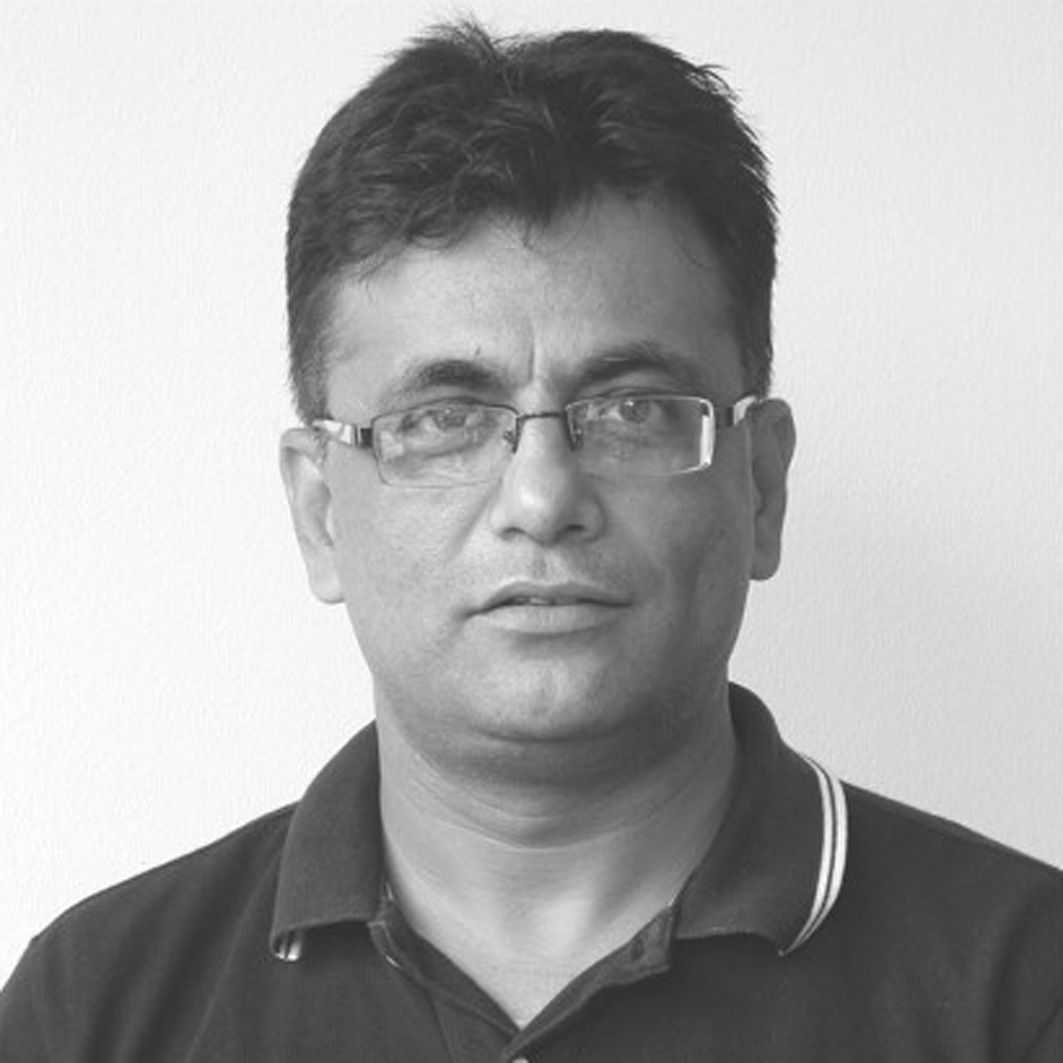
BE (Jadavpur University), M.Tech (IIT Roorkee), PhD (IIT Roorkee)
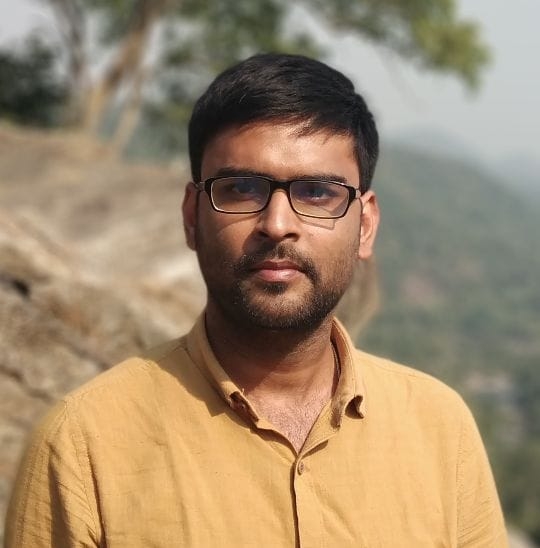
Assistant Professor Ph.D: Department of Computer Science and Engineering, IIT Kharagpur, India Email: saptarshidas13@gmail.com Linked-In: https://www.linkedin.com/in/saptarshidas13/ Google Scholar: https://scholar.google.com/citations?user=DTnEdZAAAAAJ Ph.D.: Department of Computer Science and Engineering, Indian Institute of Technology Kharagpur, India M.E.: Department of Computer Science and Engineering, Jadavpur University, Kolkata, India Professional Engagements: Jan 2021 – Present: Assistant Professor, JIS Institute of Advanced Studies and Research, Kolkata, India Sep 2020 – Jan 2021: Pandit Deendayal Petroleum University, Gandhinagar, India Research Topics: Access Control Models, Attribute-Based Access Control (ABAC), Role-Based Access Control (RBAC), Policy Engineering in ABAC, Computer Security, System Security, Blockchain Technology Research Focus: Access Control: The goal of access control is to minimize the security risk of unauthorized access to physical and logical systems. Access control is a fundamental component of security compliance programs that ensures security technology and access control policies are in place to protect confidential information, such as customer data. Most organizations have infrastructure and procedures that limit access to networks, computer systems, applications, files and sensitive data, such as personally identifiable information (PII) and intellectual property. Attribute-Based Access Control: Attribute-Based Access Control (ABAC) has recently been proposed to enforce secure access to resources in a dynamic environment. In ABAC, access decisions are based on the values of a set of attributes, each of which is a specific feature of a subject, object or environment, and a set of rules, collectively referred to as the organizational ABAC policy. ABAC considers contextual information while making an access decision. Since the access decisions are not based on the identity of the users, ABAC is suitable in scenarios where all the users are not known beforehand. This encourages, and often necessitates organizations to migrate to ABAC from their traditional access control systems. An organization intending to migrate needs an ABAC policy. The process of constructing an ABAC policy, known as policy engineering, has been identified as one of the most challenging and costliest components in implementing ABAC. My research involves algorithmic designing of ABAC policies that fulfill certain objectives. Based on the objectives there are multiple directions of research. Few of the directions are enlisted below: The constructed policy should satisfy the “Principle of least privileges”, i.e., it should not allow any unauthorized access to the organizational resources. The time required to construct an ABAC policy should be reasonable. It has been shown in the literature that the problem of constructing an ABAC policy is NP-Complete. Therefore, our objective is to design effective approximation algorithms that enable us to construct an ABAC policy in polynomial time. Another direction of research is to construct the ABAC policies in such a form that it ensures faster access decisions. This involves organizing the policies into suitable data structures. Utilization of various machine learning tools in policy engineering for ABAC. Awards & Achievements: MHRD Doctoral Scholarship (July 2015 – July 2020), MHRD, Govt. of India. MHRD Post-graduate Scholarship (July 2013 – June 2015), MHRD, Govt. of India. All India Rank 976 (percentile 99.56) in GATE (Computer Science) – 2013, India. Publications: Book Chapter: Das, B. Mitra, V. Atluri, J. Vaidya, and S. Sural, “Policy Engineering in RBAC and ABAC”, in From Database to Cyber Security, vol. 11170, Springer, 2018, pp. 24–54 Letter: Das, S. Sural, J. Vaidya, and V. Atluri, “HyPE: A Hybrid Approach toward Policy Engineering in Attribute-Based Access Control”, in IEEE Letters of the Computer Society (LOCS), vol. 1, IEEE, 2018, pp. 25–29 Journal: Das, S. Sural, J. Vaidya, and V. Atluri, “Policy Adaptation in Hierarchical Attribute-based Access Control Systems”, ACM Transactions on Internet Technology (TOIT), vol. 19, no. 3, pp. 40–1, 2019 Conferences: Das, S. Sural, J. Vaidya, and V. Atluri, “Central Attribute Authority (CAA): A Vision for Seamless Sharing of Organizational Resources”, in IEEE International Conference on Trust, Privacy and Security in Intelligent Systems and Applications (TPS-ISA), IEEE, 2019, pp. 209–217 Das, S. Sural, J. Vaidya, V. Atluri, and G. Rigoll, “VisMAP: Visual Mining of Attribute-Based Access Control Policies”, in International Conference on Information Systems Security (ICISS), Springer, 2019, pp. 79–98 Meshram, S. Das, S. Sural, J. Vaidya, and V. Atluri, “ABACaaS: Attribute-Based Access Control as a Service”, in ACM Conference on Data and Application Security and Privacy (CODASPY), ACM, 2019, pp. 153–155 Nath, S. Das, S. Sural, J. Vaidya, and V. Atluri, “PolTree: A Data Structure for Making Efficient Access Decisions in ABAC”, in ACM Symposium on Access Control Models and Technologies (SACMAT), ACM, 2019, pp. 25–35 Das, S. Sural, J. Vaidya, and V. Atluri, “Using Gini Impurity to Mine Attribute-based Access Control Policies with Environment Attributes”, in ACM Symposium on Access Control Models and Technologies (SACMAT), ACM, 2018, pp. 213–215 Das, S. Sural, J. Vaidya, and V. Atluri, “Policy Adaptation in Attribute-Based Access Control for Inter-Organizational Collaboration”, in IEEE International Conference on Collaboration and Internet Computing (CIC), IEEE, 2017, pp. 136–145

Assistant Professor PhD : Indian Institute of Technology Kharagpur, West Bengal, IndiaPost Doc : TUM School of Medicine, Germany Email: kausik@jisiasr.org Linked-In: https://www.linkedin.com/in/kausikbasak16/ Google Scholar: https://scholar.google.co.in/citations?user=urimOcEAAAAJ&hl=en” “Postdoctoral Fellow, Multiscale Functional and Molecular Imaging Group, TUM School of Medicine,Germany Ph.D., School of Medical Science and Technology, Indian Institute of Technology Kharagpur, India” Research Topics: “Medical imaging: Laser speckle contrast imaging, optoacoustic imaging, optical coherence tomography,multispectral imaging. Image processing and computer vision: Spatiotemporal and adaptive filtering, transform domainprocessing, multiresolution analysis, image segmentation and morphological processing, imageregistration, object localization, object tracking – optical flow. Machine learning: Supervised and unsupervised classifications, probabilistic graphical models, clustering,estimation techniques, neural networks.” Research Focus:My research domain focuses on imaging of human and animal organs in superficial and deep-tissue atvisible and near infra-red regime, aiming to non-invasive, in vivo and label-free assessment of variousanatomical and functional parameters in health and pathology. It encompasses various imagingmodalities like laser speckle imaging, multispectral imaging, optoacoustic imaging etc. to articulatecharacteristic response of tissue-photon interaction using computational algorithms. During the tenureof my research, I worked on developing imaging modalities through electro-optical system designs,enabling the imaging of organs and deep-tissues with centimetre to micron resolutions. It also combinesa great deal in signal and image processing with significant thrust in de-noising, image reconstruction,segmentation, clustering and machine learning. With progressive applications of scientific deductions and engineering algorithms, it comes to my deep interest to implement and manifest residentknowledge to innovate newer technological solutions for various biomedical applications. Awards & Achievements: TUM University Foundation Fellowship (Mar 2018 – Feb 2019), TUM Germany. Visiting Professor Program (June – July 2017), CentraleSupelec Paris, France. Postdoc Mobility Grant (March 2017), TUM Germany. Dean’s Travel Grant (April 2014), IIT Kharagpur, India. Winner of GE Edison Challenge 2013 (December 2013), GE India. MHRD Doctoral Scholarship (July 2010 – June 2014), MHRD, Govt. of India. MHRD Post-graduate Scholarship (July 2008 – May 2010), MHRD, Govt. of India. University medal for 3rd position in EIE (August 2008), WBUT, India. All India Rank 59 (percentile 98.51) in GATE – 2008, India. Synergistic Activities: Fellow, TUFF, TU Munich (Since 2018). Member, IEEE (Since 2009). Member, IEEE Engineering in Medicine and Biology Community (Since 2013). Member of Advisory Committee, IEEE TechSym 2016. Member of Advisory Committee, IEEE Student Branch, IIT Kharagpur (Since 2013). Chair, IEEE Student Branch, IIT Kharagpur (2012 – 2013). Secretary, IEEE EMB Student Club, IIT Kharagpur (2011 – 2012). President, SMST Society, IIT Kharagpur (2009 – 2010). Patent:“Sheet D, Basak K, Ojha T, Karri SPK. Multispectral optical imaging device and computational techniquesfor contactless functional imaging. Indian Patent No. 201731022695 dt. 28 June 2017, PCT App. No. PCT/IN2018/050418 dt. 26 June 2018.” Book:Basak K, Dutta PK, Mahadevappa M. In vivo speckle imaging of microvasculature and tissue perfusion,Lambert Academic Publishing, Germany, 2016. Journals: 1. Basak K, Deán-Ben XL, Gottschalk S, Reiss M, Razanksy D. Non-invasive determination of murineplacental and foetal functional parameters with multispectral optoacoustic tomography. Accepted inNature: Light Sc. App. (Galley Proof). [IF: 14.098] 2. Basak K, Dey G, Mahadevappa M, Mandal M, Sheet D, Dutta PK. Learning of speckle statistics for in vivo and noninvasive characterization of cutaneous wound regions using laser speckle contrast imaging. Microvas. Res. 2016; 107: 6-16. [IF: 2.465] 3. Basak K, Dey G, Mahadevappa M, Mandal M, Dutta PK. In vivo Laser speckle imaging by adaptivecontrast computation for microvasculature assessment. Opt. and Lasers in Engg. 2014; 62: 87–94. [IF:3.388] 4. Basak K, Mahadevappa M, Dutta PK. Review of Laser Speckle-based analysis in Medical Imaging. Med. Bio. Engg. Comp. 2012; 50(6): 547-558. [IF: 1.971] 5. Basak K, Mahadevappa M, Dutta PK. Pyramidal Refinement of Lucas – Kanade Optical Flow basedTracking of Peripheral Air Embolism in OCT Contrast Imaging. Int. Jr. Com. App. 2012; 52(12): 7-12. [IF: 0.702] 6. Mandal S, Basak K, Mahadevappa M, Chatterjee J, Ray AK. Development of a Cardiac Pre-ScreeningDevice for Rural Population in Emerging Economies using Ultra-Low Power Embedded System. IEEETrans. Biomed. Engg. 2011; 58(3): 745-749. [IF: 4.288] Conferences: 1. Basak K, Dey G, Sheet D, Mahadevappa M, Mandal M, Dutta PK. Probabilistic graphical modeling ofspeckle statistics in laser speckle contrast imaging for noninvasive and label-free retinal angiography.Proc. Int. Conf. IEEE Engg. Med. Bio. Soc. (EMBC), 2015. 2. Basak K, Sheet D, Karri SPK, Mahadevappa M, Chatterjee J, Dutta PK. Learning of Tissue PhotonInteraction in Laser Speckle Contrast Imaging for Label-free Retinal Angiography. Int. Symp. Biomed.Img. (ISBI), 2014. 3. Basak K, Mahadevappa M, Dutta PK. Multiscale Noise-Adaptive Homomorphic Filtering based SpeckleDenoising in Laser Speckle Imaging. Proc. Nat. Conf. Comp. Vis. Patt. Recog. Img. Proces. Graph.(NCVPRIPG), 2013. 4. Basak K, Patra R, Mahadevappa M, Dutta PK. Automated Detection of Air Embolism in OCT ContrastImaging: Anisotropic Diffusion and Active Contour based Approach. Proc. Int. Conf. Emerg. App. Inf.Tech. (EAIT), 2012. 5. Mandal S, Martis RJ, Acharya UR, Basak K, Chakraborty C, Mandana KM, Ray AK. A Framework forEarly Automated Diagnosis of Coronary Artery Disease using Data Fusion of Electrocardiogram andPhonocardiogram Signals. Proc. IEEE EMBS Spl. Topic Conf. Point-of-Care Healthcare Tech. (PoCHT),2012. 6. Basak K, Mandal S, Mahadevappa M, Chatterjee J, Ray AK. A Comparative Study of PhonocardiogramAnalysis Techniques based on Mixed Signal Processor. Proc. INDICON, 2010. 7. Basak K, Mandal S, Mahadevappa M, Chatterjee J, Ray AK. Phonocardiogram Signal Analysis usingAdaptive Line Enhancer Methods on Mixed Signal Processor. Proc. Int. Conf. Sig. Proces. Comm.(SPCOM), 2010. 8. Mandal S, Basak K, Mahadevappa M, Chatterjee J, Ray AK. A Wavelet Based Approach to Heart SoundDe-noising and Segmentation. Proc. Int. Conf. Elect. Desig. Sig. Proces. (ICEDSP), 2009. 9. Patra R, Basak K, Chakraborty C. CADLID: Pattern Classification Approach to Computer Aided Diagnosis of Liver Disease. Proc. Innov. Conf. Emb. Sys. Mob. Comm. Comp. 2010. 10. Basak K, Mondal S, Hajzra S, Das A, Bera MK. Rapid Software Prototyping and Verification of Railway Interlocking System using State chart. Proc. Nat. Conf. Emerg. Tech. Tech. Edu. (ET & TE), 2008.
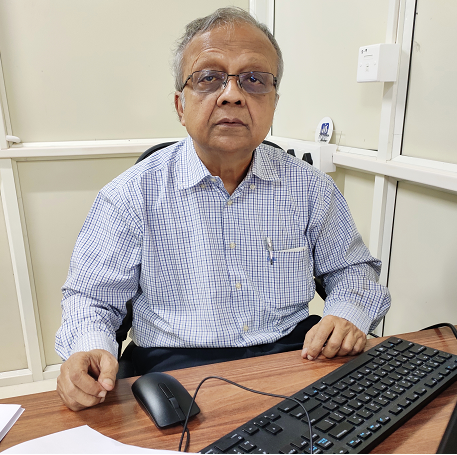
Prof. Arun Kumar Majumdar Former Professor, IIT Kharagpur